


How to choose the right fabric for your sewing project
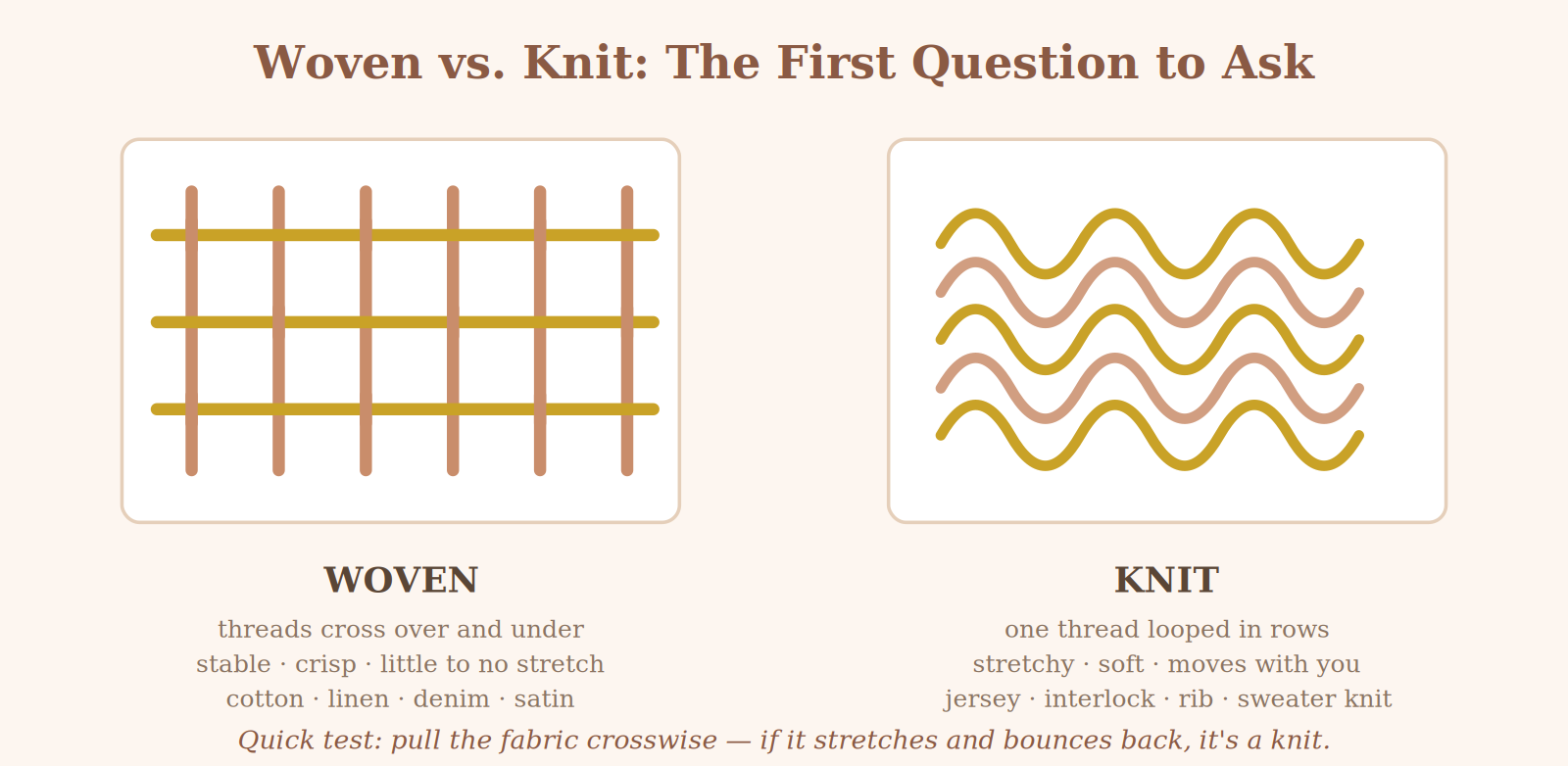
Quick test in the shop: pull the fabric crosswise — if it stretches and bounces back, it’s a knit.
How to measure stretch percentage: fold the fabric, hold 10 cm between your fingers, and gently stretch it along the crosswise grain. If 10 cm stretches to 12 cm, that’s 20% stretch; to 15 cm, that’s 50%. This matters because knit patterns specify a minimum — every one of our patterns for stretch fabrics lists it right on the product page, so check it before buying. Less stretch than the pattern asks for means a garment you can’t move in.
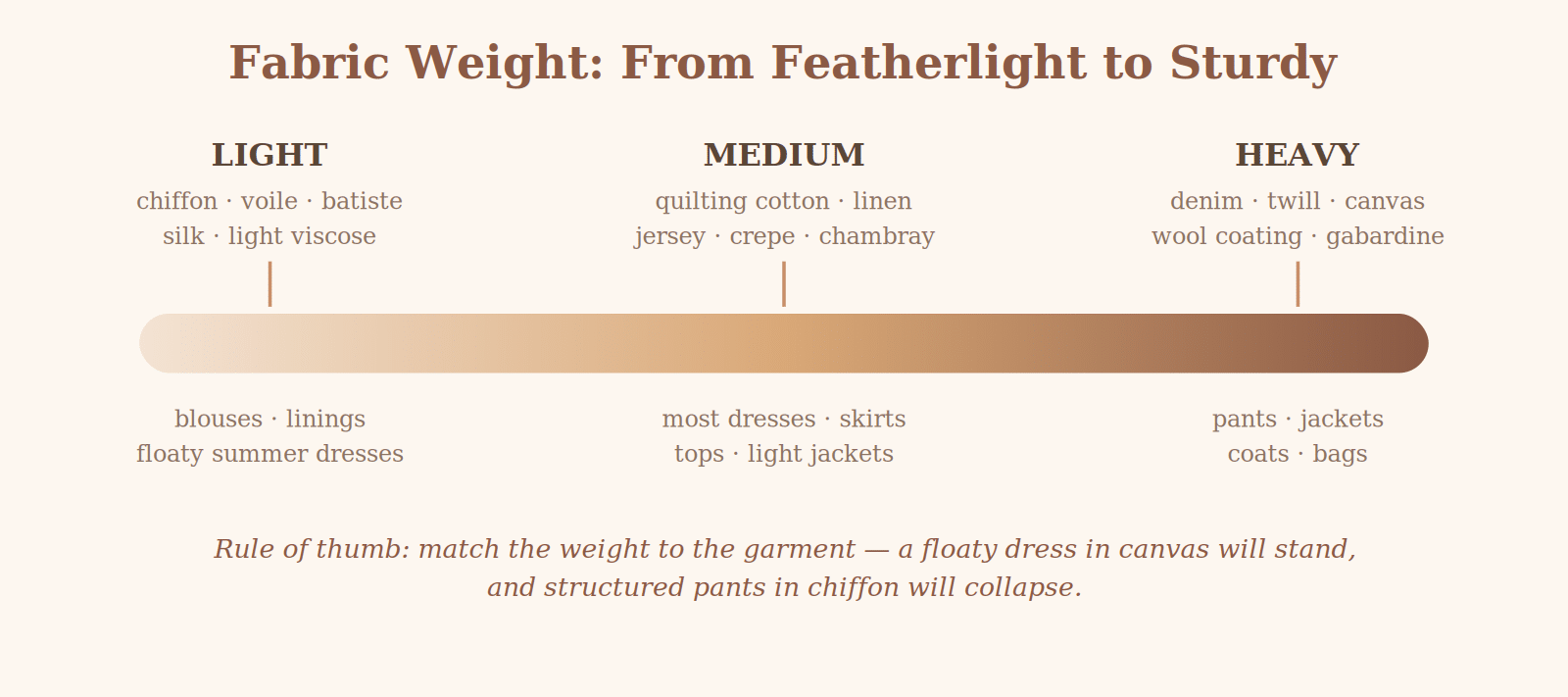
If you’re shopping online and can’t touch the fabric, GSM (grams per square meter) is your most reliable clue: under 130 gsm is light (blouses, linings, floaty dresses), 130–250 gsm is medium (most dresses, skirts and tops), and above 250 gsm is heavy (pants, jackets, coats and bags).
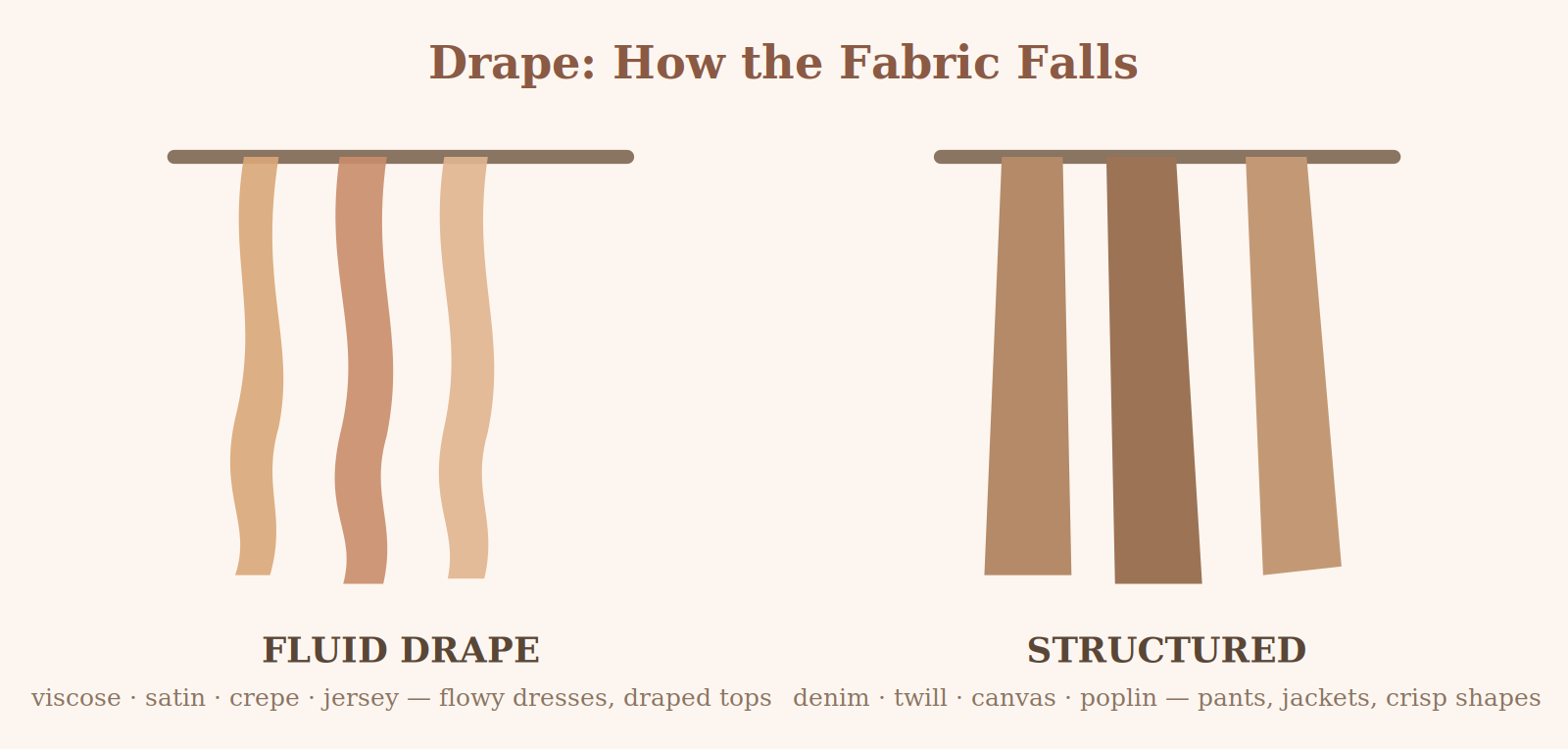
The shop test is simple: unroll half a meter and let it hang from your hand. Does it flow like water or stand like paper? Neither is better — they’re just meant for different designs.
📌 Fabric Cheat Sheet by Garment
Save this table for your next shopping trip:
| You want to sew… | Best fabrics | Look for |
|---|---|---|
| A crisp blouse or shirt | Cotton poplin, lawn, linen | Light woven, some body |
| A flowy dress or drapey top | Viscose, crepe, satin | Light–medium woven, fluid drape |
| A t-shirt or fitted knit dress | Cotton jersey, interlock | Knit, 20–40% stretch |
| Leggings or a body-hugging dress | Jersey with elastane | Knit, 40%+ stretch with recovery |
| Tailored pants or a jacket | Cotton twill, gabardine, denim | Medium–heavy woven, structured |
| An elegant evening piece | Satin, silk, crepe de chine | Light woven, high drape, shine |
| A cozy winter coat | Wool coating, boiled wool | Heavy woven, warm, stable |
- Once you’ve chosen your fabric, pair it with the right needle — see our guide on how to choose the right sewing machine needle.
❓ Frequently Asked Questions About Choosing Fabric
What is the best fabric for a beginner sewer?
Medium-weight cotton woven — like poplin, chambray or a quilting cotton — is the easiest fabric to start with. It doesn’t slip under the presser foot, it holds a crease, and it forgives a wobbly seam. Avoid satin, chiffon and thin jersey for your first few projects; they slide, curl and stretch while you sew.
Can I use a woven fabric for a knit pattern?
No, not without changing the pattern. Knit patterns are drafted with negative ease, meaning the garment is smaller than your body and relies on the fabric’s stretch to fit. Sewn in a woven, the same pattern simply won’t go on. The reverse is safer: a loose woven pattern can often be sewn in a stable knit, though the result will be softer and less structured.
Should I prewash my fabric before cutting?
Yes, wash and dry it exactly the way you plan to wash the finished garment. Natural fibers like cotton, linen and viscose can shrink 3–5% on the first wash, which is enough to turn a perfect fit into a tight one. Skip this step only for dry-clean-only fabrics such as wool coating and silk.
How can I judge a fabric when shopping online?
Look for three numbers in the description: composition, weight in gsm, and stretch percentage. Composition tells you how it will feel and wash, gsm tells you whether it’s light, medium or heavy, and stretch percentage tells you whether it will work for a knit pattern. If a shop lists none of these, order a swatch before committing to several meters.
What’s the difference between fabric weight and thickness?
Weight measures how much a square meter of fabric weighs; thickness is just how thick it feels. They usually go together, but not always — a densely woven silk can be thin and still fairly heavy, while a loose knit can feel thick yet weigh very little. Patterns are written around weight and drape, so trust the gsm over your fingers.
Which fabrics work best for stretch patterns?
Cotton jersey, interlock and ponte are the most reliable choices, with elastane blends for anything body-hugging. Match the stretch percentage the pattern asks for — you’ll find it listed on each of our patterns for stretch fabrics. Too little stretch and the garment won’t move with you; too much and it will bag out at the knees and elbows.